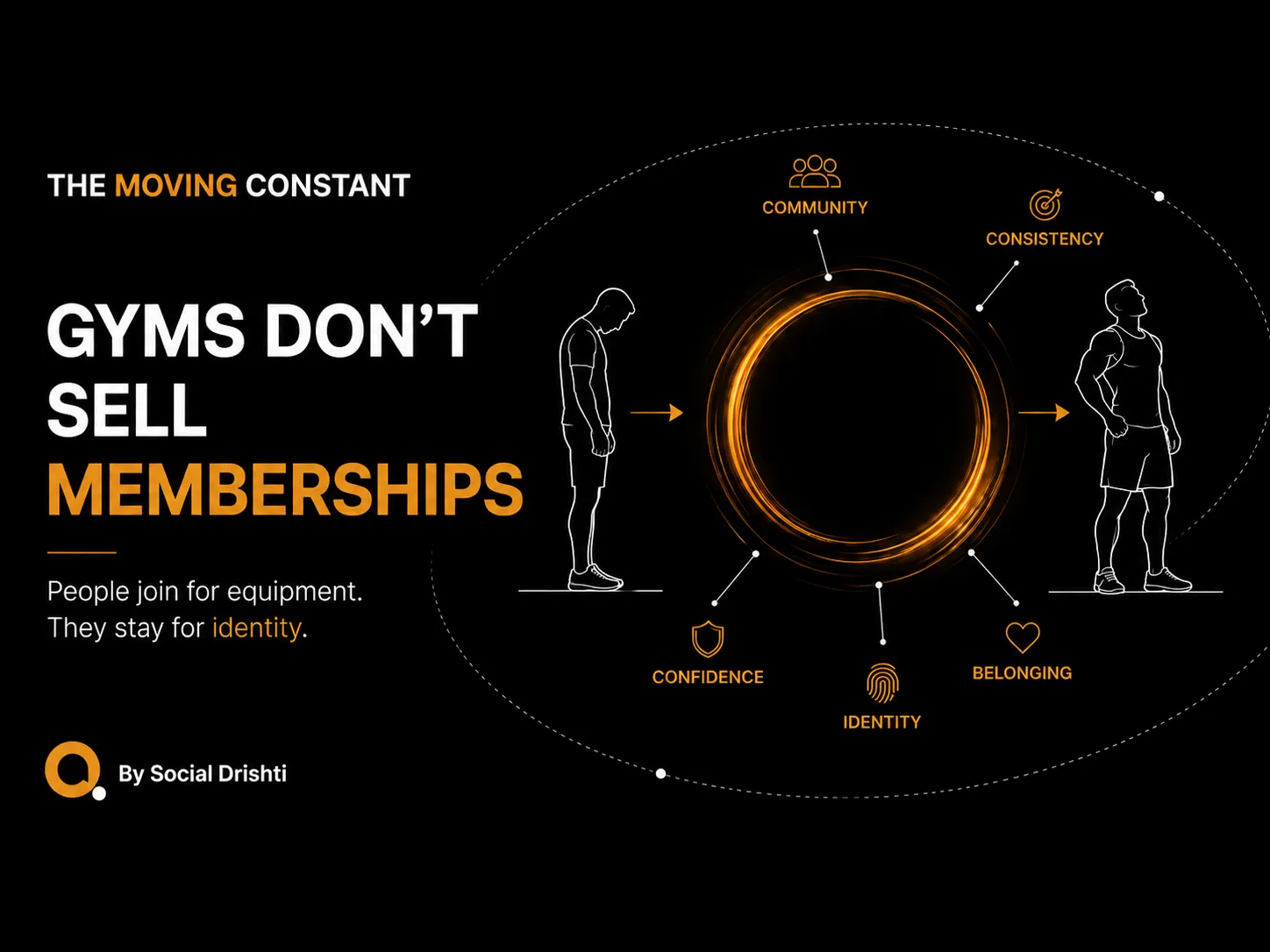
Most gyms believe they are in the fitness business. They focus their marketing on heavy dumbbells, shiny cardio rows, and pristine locker rooms.
This is a fundamental misunderstanding. You are not selling equipment; you are selling self-belief to people who currently doubt themselves.
If you build your entire marketing strategy around showing off your facilities, you are fighting a losing battle. Your competitors can always buy newer machines or cut their prices lower.
Why does a boutique facility with basic equipment and premium pricing have a waiting list, while your state-of-the-art gym is struggling to break even?
The Constant Meets the Moving
In our first chapter, we established the concept of The Moving Constant. The constant remains human psychology the deep-seated desire for status, belonging, and transformation. The moving elements are the channels and tactics we use to capture that attention and turn it into active memberships.
For a fitness business, execution looks different than it does for a B2B SaaS or a real estate developer. But the core pillars remain unchanged.
Let’s look at how this plays out in reality.
"Posting daily is not your solution."
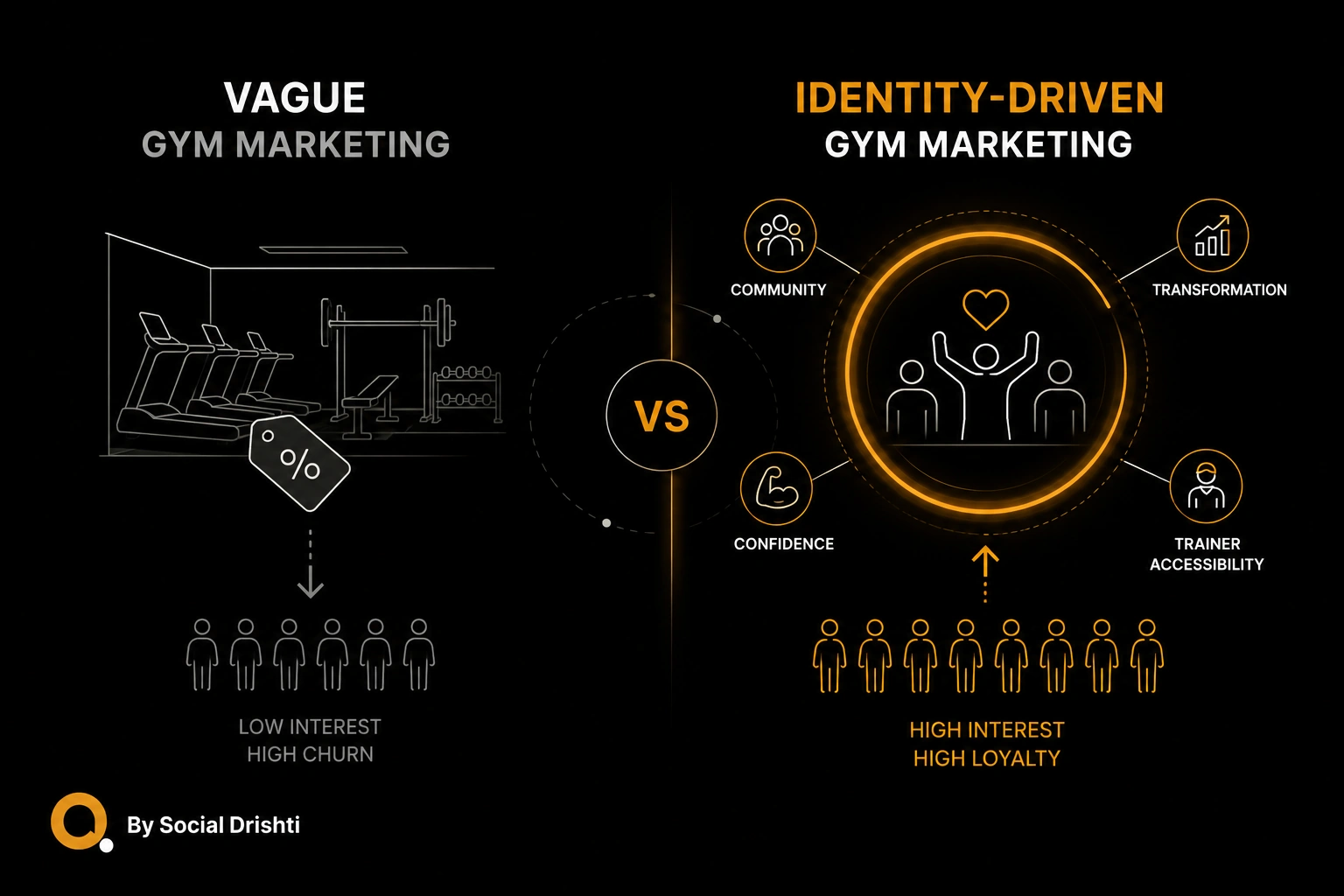
Many gym owners believe that posting three generic workout reels a day on Instagram will magically fill their class schedules. It won’t. It simply adds noise to an already crowded digital space.
A Mini-Story:
A gym owner came to us after spending ₹1.5L on high-production cinematic reels.
Thousands of views. Zero memberships sold.
The problem wasn’t the video quality.
The videos showcased fitness models lifting weights that the average desk worker, the gym’s actual target demographic, found intimidating rather than inspiring. The content drove engagement from fitness enthusiasts thousands of miles away, but failed to build trust with local prospects living within a 3-kilometer radius.
"This is where interest dies."
The Framework: Traffic → Trust → Transaction
To fix this, we apply a simple framework: Traffic → Trust → Transaction.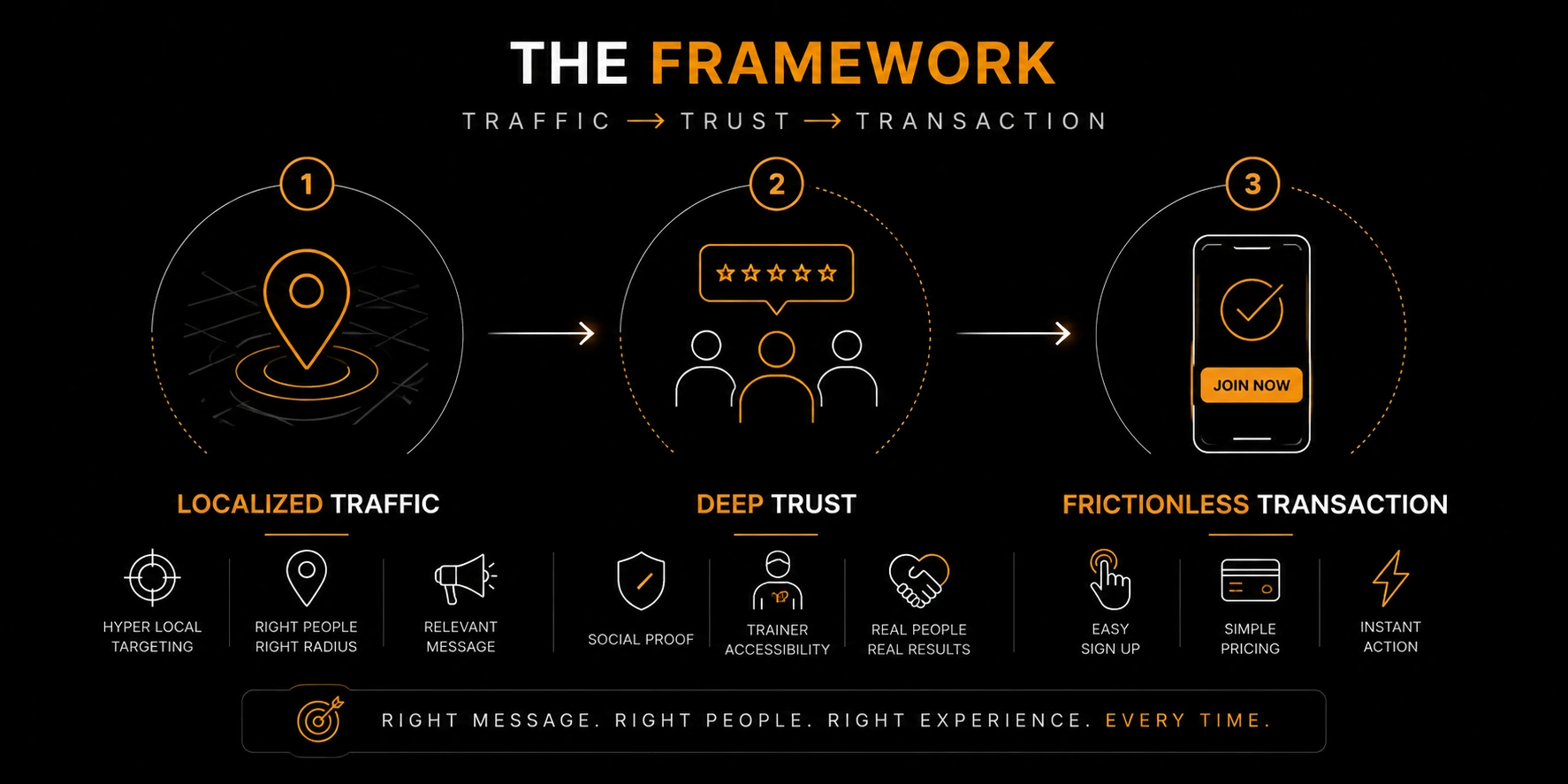
1. Traffic (The Moving Target)
In fitness marketing, your target radius is incredibly tight. Most people will not travel more than 10 to 15 minutes to go to the gym. Therefore, broad brand awareness is a waste of budget.
Your performance marketing must be highly localized. Use geo-fenced social media ads to target neighborhoods within a tight radius of your facility.
"This is where most businesses lose money."
Spending ad budget on a city-wide audience when 90% of your potential members live within a 3-kilometer radius of your front door.
2. Trust (The Constant)
People do not buy gym memberships; they buy the confidence that they will actually use them.
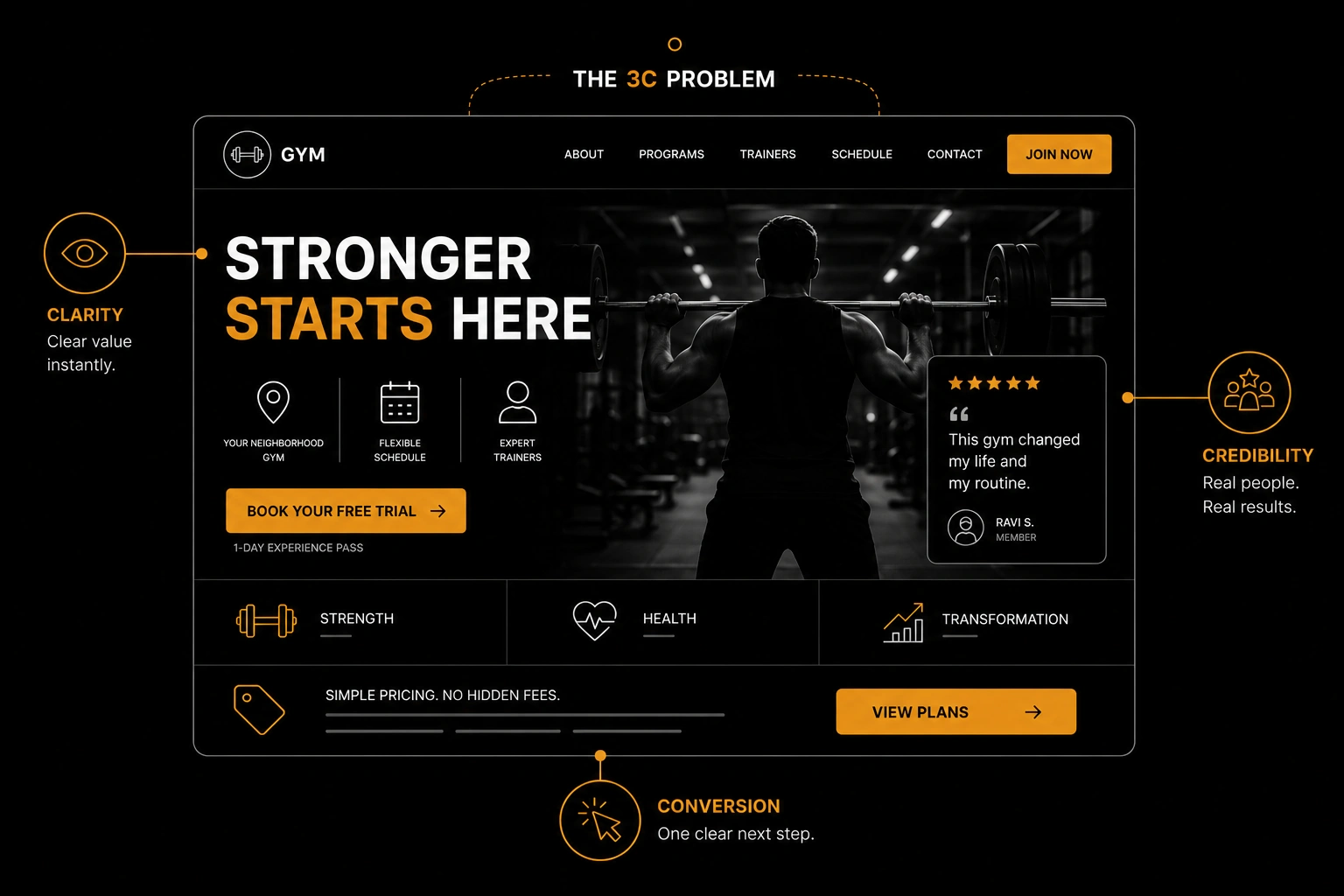
The 3C Problem: Clarity, Credibility, Conversion.
Clarity: Is it clear what a beginner should do on day one?
Credibility: Do your testimonials show real, relatable people, or just genetically gifted fitness influencers
Showcase the journey of an average member. Highlight your trainers not as bodybuilders, but as coaches who understand busy schedules and desk-job posture.
"You’re not unlucky. You’re unclear."
3. Transaction
Remove the friction. Avoid forcing prospective members to fill out long, complex forms or jump through sales hoops just to find out your pricing options.
"If you had to change one thing, change this."
Offer a low-barrier, high-value entry point. A simple “1-Day Experience Pass” or a complimentary “Movement Assessment” converts significantly better than a hard sales pitch for an annual contract.
Execution Across Channels
To bring The Moving Constant to life, your marketing channels must work in harmony:
Video & Shoot Style: Stop using stock imagery of fitness models. Invest in organic shoots featuring your actual members and trainers. Show the warmth, the community, and the supportive environment.
Website: Keep it clean. Your website’s sole job is to secure a local lead. Ensure your location, class schedule, and a prominent call-to-action are visible within the first three seconds of landing on the page.
Social Media: Use social channels to build community, not just sell. Share form tips, nutritional advice, and member spotlights.
"If everything looks important, nothing converts."
The Bottom Line
A gym is not a collection of metal and rubber. It is a local community hub. When you shift your marketing focus from the utility of your equipment to the reality of human transformation, your acquisition costs will reflect the change.
"Traffic exposes problems. It doesn’t solve them."
If your gym’s internal culture and onboarding processes are broken, throwing more ad spend at the problem will only exhaust your budget faster. Build a clear, credible experience first—then turn on the traffic.
"Start here."
The Road Ahead
Marketing is not a static set of rules to be memorised and applied blindly. It is a dynamic balance between what remains unchanged in human behaviour and what is constantly moving the tactical platforms we use to reach them.
In the upcoming parts of The Moving Constant, we will dive deep into specific sectors to deconstruct exactly how these channels should be configured.
Is your marketing strategy aligned with your business model?
We provide comprehensive, human-reviewed strategic audits. A senior growth strategist from our team will evaluate your current channels, website structure, and performance metrics to identify gaps where your strategy might be misaligned with your target audience.
→ Request a Strategic Audit


Comments